
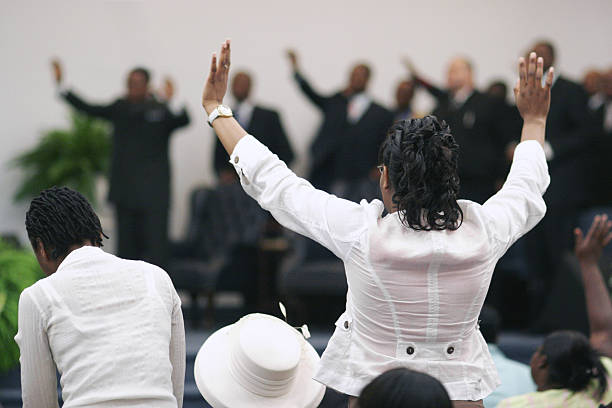
Praise rises from a heart awake to God’s present grace, not from performance or routine. Drawing from Isaiah 29:13–14, the call is to examine whether God is truly “in the shout.” Outward forms—songs, offerings, ministries—are good, but they are expressions, not the essence, of worship. True worship is to honor God with extravagant love and extreme submission; it is loving God enough to submit to His will and His way. That reframes worship from a Sunday event to a life priority. The question becomes: Where does God sit on the list of priorities? Does the heart have to be persuaded to gather with God’s people, or is there a settled yes to His presence?
Isaiah rebukes a worship that sounds right but rings hollow: lips near, hearts far. Such religion becomes routine—bow here, recite there—while the heart drifts. Words, however correct, do not impress God if the heart does not mean them. The measure is not the volume of the shout but the reality of internal worship. Genuine worship forgets who is watching because it remembers Who is worthy.
Three diagnoses emerge. First, the external illusion: learned rhetoric and familiar hymns can mask spiritual blindness; one can know all the right phrases and have no fruit. Second, the internal exclusion: motives can quietly go wrong—self-glorification when recognition is craved, transactional worship that barters for blessings, and man-made inventions that elevate tradition over truth. Like a leafy fig tree without fruit, appearances promise what the heart cannot supply. Third, the man-made manifesto: when fear of God is “taught by the precepts of men,” worship shifts from Scripture to human rulebooks. God rejects manufactured praise and coerced responses; He calls for Spirit-and-truth devotion shaped by His Word.
Isaiah also promises that God will do “a marvelous work” that undoes the wisdom of the self-assured and exposes empty religion. That marvelous work begins in the heart: repentance, reordered loves, and a return to the Book. When worship becomes love and submission—private before it is public, internal before external—then any shout that follows is simply the overflow of a life surrendered.
Key Takeaways
- 1. Worship is love and submission. True worship is not performance but a heart that loves God enough to yield. Submission is not passive; it is an active yes to God’s will over personal preference. This reorients worship from a weekly event to a daily posture. A surrendered life is the soil where true praise grows.
- 2. Beware the external illusion of praise. It is possible to honor with lips while the heart drifts, reciting truth without receiving it. Familiar words and melodies can inoculate the soul against conviction if never applied. God weighs the intent beneath the utterance, not the polish of the phrase. Let the mouth follow the heart, not disguise it.
- 3. Check motives; guard your heart. Self-glory, bartering for blessings, and elevating traditions are subtle corruptions of worship. If offense arises when recognition is lacking, the audience has shifted from God to self. Worship in spirit and truth requires motive-level repentance, where love for God, not outcomes, holds the center. The heart’s desires steer the life; aim them at Him.
- 4. Measure faith by internal worship. Shouting is not a reliable metric of spiritual maturity. The truest test is a Godward heart that can forget the crowd because it remembers His nearness. Internal worship steadies public praise and sanctifies private life. Live for the gaze of One.
- 5. Return to the Word alone. When worship is coached by human precepts, reverence is manufactured and fragile. Scripture must govern the gathered church and the hidden life, not inherited customs or cultural scripts. God’s Word corrects, frees, and forms genuine devotion. Move from rulebooks to the Book.