Day 3: Act Like You’re Living, Not Dying

Day 3: Act Like You’re Living, Not Dying

In the midst of overwhelming trials, it’s easy to succumb to despair and act as if all hope is lost. However, even when depression threatens to consume us, we are called to choose life and strength. This means intentionally nourishing ourselves, both physically and spiritually, for the deliverance that God has promised. It’s about shifting our perspective from the end of a struggle to the beginning of a new walk, a new talk, and a new understanding of God’s power in our lives. Let your actions reflect the belief that God is bringing you through, not leaving you to perish.

Philippians 4:13 (ESV)
I can do all things through him who strengthens me.

Reflection: In what area of your life are you currently feeling overwhelmed and tempted to “throw a pity party”? What small, concrete action can you take this week to “act like you’re living” in faith, trusting God for a new beginning?

DevotionalsLeave a commentLeave a comment

Day 2: Hang On in Your Holding Pattern

Day 2: Hang On in Your Holding Pattern

Sometimes, after receiving a promise from God, our circumstances don’t immediately improve; in fact, they might even worsen. These periods of waiting, like a plane in a holding pattern, are not signs of God’s forgetfulness but opportunities for our faith to be refined. God uses these times to observe our attitude, our patience, and the depth of our trust in Him. Even when the storm doesn’t cease, and the situation remains unchanged, our steadfastness reveals the true measure of our reliance on His timing and power.

James 1:2-4 (ESV)
Count it all joy, my brothers, when you meet trials of various kinds, for you know that the testing of your faith produces steadfastness. And let steadfastness have its full effect, that you may be perfect and complete, lacking in nothing.

Reflection: When circumstances worsen after you’ve prayed and received a promise, what specific spiritual practices can help you maintain faith and a positive attitude during that “holding pattern”?

DevotionalsLeave a commentLeave a comment

Day 1: Hold On to God’s Unfailing Promise

Day 1: Hold On to God’s Unfailing Promise

When life’s storms rage, it is easy to lose sight of hope, especially when human promises often fall short. Yet, we are called to anchor our souls to the unwavering promises of God. Unlike the fleeting assurances of people, every word God speaks is certain to come to pass. He is faithful to His word, and His plans for us will prevail, even when circumstances seem dire. Trust in His divine assurance, knowing that what He declares, He will surely bring to fruition.

Acts 27:24-25 (ESV)
saying, ‘Do not be afraid, Paul; you must stand before Caesar. And behold, God has granted you all those who sail with you.’ So take heart, men, for I have faith in God that it will be exactly as I have been told.

Reflection: When you reflect on past experiences where human promises have disappointed you, how does remembering God’s perfect faithfulness encourage you to trust His word more deeply in your current challenges?

DevotionalsLeave a commentLeave a comment

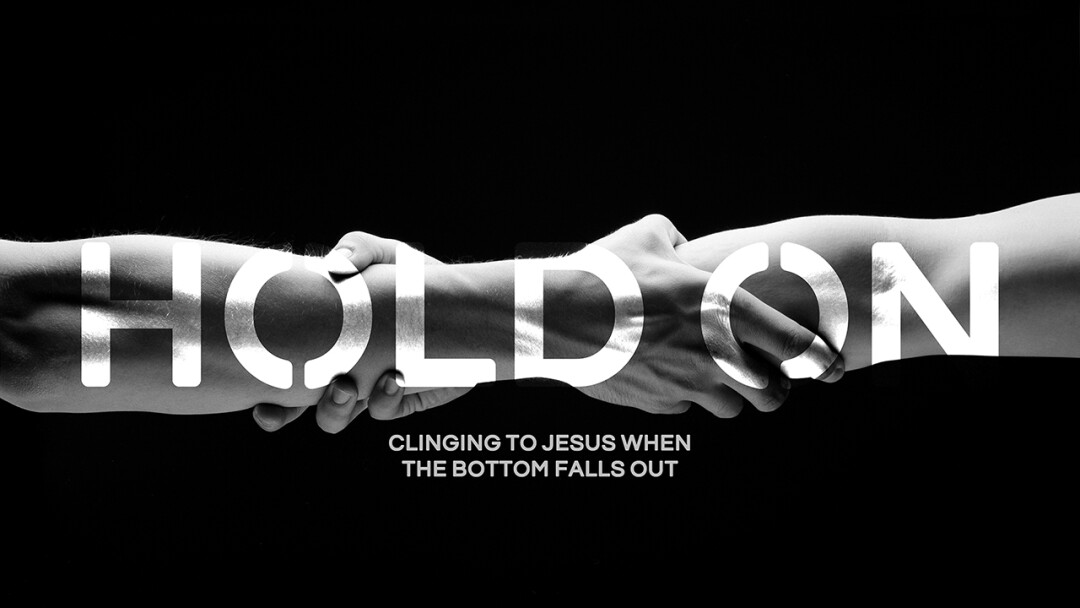
“Hold On Until You Get Out”

The passage calls believers to a faith that stands steady in the midst of storms. Drawing from the shipwreck narrative, it insists that God’s promises are objective anchors: even when circumstances worsen, the promise that life will be preserved remains true. Believers are urged to cling to divine assurances rather than capitulate to panic, to refuse the false counsel of fear, and to live in the conviction that God’s intent for deliverance is active even when unseen.

Endurance is framed not as passive waiting but as disciplined comportment. The crew’s long “holding pattern” becomes a classroom for patience—how faith behaves day after day when deliverance is delayed. Practical spiritual habits are emphasized: eat (gain strength), praise (maintain perspective), assemble (remain in fellowship), and study the Word (sustain hope). These are the means by which believers are tested and refined while God times the rescue.

Gratitude before visible change is presented as an act of worship and a mark of mature trust. Giving thanks in the dark, like breaking bread in the storm, reorients the heart toward the Lord who controls the seas. Praise is not contingent on the cessation of trouble but is itself a spiritual posture that anticipates God’s faithfulness.

The text also reframes wreckage as part of God’s providential route. The broken ship becomes necessary material for making it to shore; loss and dismantling can propel a person toward promised ground. Trials that strip, break, or reorder life are not mere ruin but often the instruments by which God redirects and prepares for the next season.

Finally, the narrative insists on a living testimony: deliverance produces new devotion. Those who have been plucked from deep waters are compelled to praise, to steward the testimony, and to encourage others in the boat. The summons is clear—hold the promise, live in the holding pattern with faith and discipline, give thanks before the rescue is seen, and let brokenness be a stage for God’s forward work.


Key Takeaways
  • 1. Hold fast to God’s promise. Belief must attach to God’s spoken word, not to immediate circumstances. When a promise is declared by God, the reality of that promise should shape fear, choices, and hope—even while winds rage and waves rise. Stability in trial comes from remembering what God has already said about the outcome and refusing to rewrite that assurance with present anxiety.
  • 2. Endure the holding pattern patiently. Delays are opportunities to demonstrate the depth of faith rather than failures of God’s care. How a person behaves while waiting—whether they retreat into despair or practice steady obedience—reveals their trust. Patience is active: it strengthens the soul so that deliverance is met with resilience instead of shock.
  • 3. Praise God before visible deliverance. Thanksgiving in the midst of darkness is not denial of difficulty but a declaration of who God is. Praising prior to seen relief anchors the heart to God’s character and undermines the authority of fear. This posture sustains courage and reshapes expectation toward God’s faithfulness.
  • 4. Turn wreckage into forward movement. Destruction in one season can become the very means of rescue in the next. God often repurposes broken fragments to carry people to promised shores; what seems like loss may be material for new life. Viewing ruin through that lens invites hope and cooperation with God’s redeeming design.
Doke BlogLeave a commentLeave a comment

Day 5: From self-glorification to fruitful, God-centered devotion

Day 5: From self-glorification to fruitful, God-centered devotion

Motives matter: worship can drift toward applause, recognition, or a quick blessing. God invites you to serve for His delight, not for a pat on the back or a material payoff. He looks for fruit, not just leaves—substance beyond appearance, faithfulness beyond noise. Let your desire be to please the Audience of One, whether or not anyone notices. Ask Him to prune what is showy but empty and to grow what is quiet but true. The result will be fruit that remains.

Mark 11:12–14 — Jesus approached a fig tree full of leaves but found no fruit, so He declared that it would no longer feed anyone. The display promised something real, but the substance was missing, and He exposed the pretense.

Reflection: In one ministry or routine act of service you do, what change would shift it from being about being seen to actually bearing fruit for God and people?

DevotionalsLeave a commentLeave a comment

Day 4: Return from man-made rules to God’s Word

Day 4: Return from man-made rules to God’s Word

When fear of God is propped up by human precepts, worship turns manufactured and hollow. Traditions can serve, but they must never substitute for Scripture’s authority. Open the Book again, and let God’s voice reorder the house. Reverence that must be demanded by people does not last; reverence born from the Word will endure. Choose the authority that breathed life, not the rules that drained it. Let God’s Word lead and let everything else take its rightful place.

Mark 7:6–8 — “You honor Me with your lips while your heart keeps its distance. That kind of worship is empty, because you trade in human instructions as though they were My commands. You set aside what God says to cling to what people have always done.”

Reflection: Where have you relied on “how we’ve always done it” more than on what Scripture actually teaches, and how could you realign that area this week?

DevotionalsLeave a commentLeave a comment

Day 3: When lips honor God but hearts wander

Day 3: When lips honor God but hearts wander

God is not impressed by theological polish; He is moved by a heart that is present and true. True worship forgets who is watching and remembers Who is worthy. It is spirit and truth—your inner life aligned with God’s reality, not just outward excitement or the “right” words. When your heart is near, your voice, posture, and choices follow. Let your worship begin where God sees deepest, and let everything else flow from there. Come honestly, and come home to Him.

John 4:23–24 — The moment has arrived when genuine worshipers come to the Father from the deepest part of themselves and in line with what is true; that is the kind of worshiper the Father is looking for. God is spirit, so those who worship Him must do it from the heart and according to the truth.

Reflection: If your worship this week started from the inside out, what would change first—your words, your pace, your posture, or your attention?

DevotionalsLeave a commentLeave a comment

Day 2: Extravagant love and extreme submission define worship

Day 2: Extravagant love and extreme submission define worship

Worship isn’t the song list, the offering plate, or the volunteer roster—those are expressions, not the core. Worship is loving God with extravagance and yielding to His will with glad surrender. It is a relationship where His place on your priority list becomes clear in your choices. When love and submission meet, worship becomes a way of life, not merely a moment in a service. Let your schedule, budget, and decisions preach what your lips sing. God is worthy of first place, not leftovers.

Isaiah 29:13–14 — The Lord says, “They come close with polished words and honor Me with their lips, yet their hearts have drifted far away. Their reverence is learned by human rules. So I will step in with a surprising work that will overturn their proud wisdom and expose the limits of their understanding.”

Reflection: Which current habit most clearly shows God is first in your life, and what is one tangible change that would move Him from second place to first?

DevotionalsLeave a commentLeave a comment

Day 1: Intentional worship over faking it and shaking it

Day 1: Intentional worship over faking it and shaking it

Worship is a choice you can make before you ever step into a room. You cannot make anyone else praise, but you can offer your whole self to God because He woke you up and met you with a right-now mercy. When you aim your heart toward Him, you stop tracking who is or isn’t engaged around you. Set your intention: “I came to give God my praise,” and let that focus carry you. As you prioritize His presence, distractions lose their grip and your soul finds its voice. Seek Him first, and watch Him order the rest.

Matthew 6:33 — Make God’s reign and His way of life your first pursuit, and the needs that worry you will be provided in their time.

Reflection: What would it look like for you to prepare your heart on Saturday night so you can offer intentional worship on Sunday morning, regardless of who sits beside you?

DevotionalsLeave a commentLeave a comment

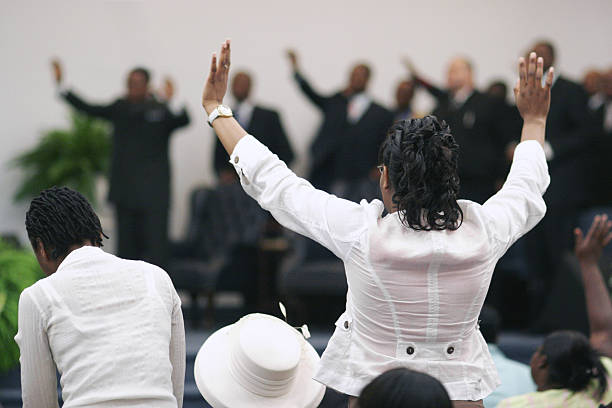
“Is God In My Shout”

Praise rises from a heart awake to God’s present grace, not from performance or routine. Drawing from Isaiah 29:13–14, the call is to examine whether God is truly “in the shout.” Outward forms—songs, offerings, ministries—are good, but they are expressions, not the essence, of worship. True worship is to honor God with extravagant love and extreme submission; it is loving God enough to submit to His will and His way. That reframes worship from a Sunday event to a life priority. The question becomes: Where does God sit on the list of priorities? Does the heart have to be persuaded to gather with God’s people, or is there a settled yes to His presence?

Isaiah rebukes a worship that sounds right but rings hollow: lips near, hearts far. Such religion becomes routine—bow here, recite there—while the heart drifts. Words, however correct, do not impress God if the heart does not mean them. The measure is not the volume of the shout but the reality of internal worship. Genuine worship forgets who is watching because it remembers Who is worthy.

Three diagnoses emerge. First, the external illusion: learned rhetoric and familiar hymns can mask spiritual blindness; one can know all the right phrases and have no fruit. Second, the internal exclusion: motives can quietly go wrong—self-glorification when recognition is craved, transactional worship that barters for blessings, and man-made inventions that elevate tradition over truth. Like a leafy fig tree without fruit, appearances promise what the heart cannot supply. Third, the man-made manifesto: when fear of God is “taught by the precepts of men,” worship shifts from Scripture to human rulebooks. God rejects manufactured praise and coerced responses; He calls for Spirit-and-truth devotion shaped by His Word.

Isaiah also promises that God will do “a marvelous work” that undoes the wisdom of the self-assured and exposes empty religion. That marvelous work begins in the heart: repentance, reordered loves, and a return to the Book. When worship becomes love and submission—private before it is public, internal before external—then any shout that follows is simply the overflow of a life surrendered.


Key Takeaways
  • 1. Worship is love and submission. True worship is not performance but a heart that loves God enough to yield. Submission is not passive; it is an active yes to God’s will over personal preference. This reorients worship from a weekly event to a daily posture. A surrendered life is the soil where true praise grows.
  • 2. Beware the external illusion of praise. It is possible to honor with lips while the heart drifts, reciting truth without receiving it. Familiar words and melodies can inoculate the soul against conviction if never applied. God weighs the intent beneath the utterance, not the polish of the phrase. Let the mouth follow the heart, not disguise it.
  • 3. Check motives; guard your heart. Self-glory, bartering for blessings, and elevating traditions are subtle corruptions of worship. If offense arises when recognition is lacking, the audience has shifted from God to self. Worship in spirit and truth requires motive-level repentance, where love for God, not outcomes, holds the center. The heart’s desires steer the life; aim them at Him.
  • 4. Measure faith by internal worship. Shouting is not a reliable metric of spiritual maturity. The truest test is a Godward heart that can forget the crowd because it remembers His nearness. Internal worship steadies public praise and sanctifies private life. Live for the gaze of One.
  • 5. Return to the Word alone. When worship is coached by human precepts, reverence is manufactured and fragile. Scripture must govern the gathered church and the hidden life, not inherited customs or cultural scripts. God’s Word corrects, frees, and forms genuine devotion. Move from rulebooks to the Book.
Doke BlogLeave a commentLeave a comment