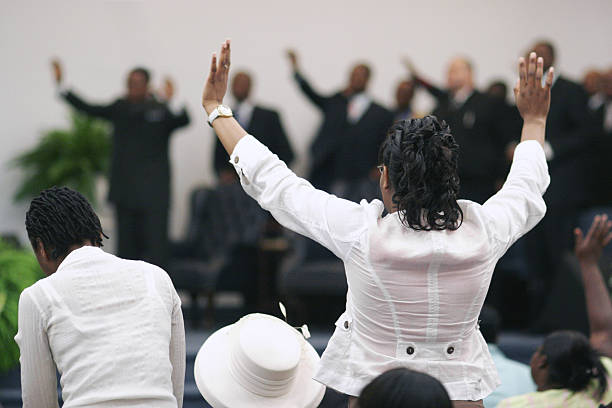
Day 3: When lips honor God but hearts wander

Day 3: When lips honor God but hearts wander

God is not impressed by theological polish; He is moved by a heart that is present and true. True worship forgets who is watching and remembers Who is worthy. It is spirit and truth—your inner life aligned with God’s reality, not just outward excitement or the “right” words. When your heart is near, your voice, posture, and choices follow. Let your worship begin where God sees deepest, and let everything else flow from there. Come honestly, and come home to Him.

John 4:23–24 — The moment has arrived when genuine worshipers come to the Father from the deepest part of themselves and in line with what is true; that is the kind of worshiper the Father is looking for. God is spirit, so those who worship Him must do it from the heart and according to the truth.

Reflection: If your worship this week started from the inside out, what would change first—your words, your pace, your posture, or your attention?

DevotionalsLeave a commentLeave a comment

Day 2: Extravagant love and extreme submission define worship

Day 2: Extravagant love and extreme submission define worship

Worship isn’t the song list, the offering plate, or the volunteer roster—those are expressions, not the core. Worship is loving God with extravagance and yielding to His will with glad surrender. It is a relationship where His place on your priority list becomes clear in your choices. When love and submission meet, worship becomes a way of life, not merely a moment in a service. Let your schedule, budget, and decisions preach what your lips sing. God is worthy of first place, not leftovers.

Isaiah 29:13–14 — The Lord says, “They come close with polished words and honor Me with their lips, yet their hearts have drifted far away. Their reverence is learned by human rules. So I will step in with a surprising work that will overturn their proud wisdom and expose the limits of their understanding.”

Reflection: Which current habit most clearly shows God is first in your life, and what is one tangible change that would move Him from second place to first?

DevotionalsLeave a commentLeave a comment

Day 1: Intentional worship over faking it and shaking it

Day 1: Intentional worship over faking it and shaking it

Worship is a choice you can make before you ever step into a room. You cannot make anyone else praise, but you can offer your whole self to God because He woke you up and met you with a right-now mercy. When you aim your heart toward Him, you stop tracking who is or isn’t engaged around you. Set your intention: “I came to give God my praise,” and let that focus carry you. As you prioritize His presence, distractions lose their grip and your soul finds its voice. Seek Him first, and watch Him order the rest.

Matthew 6:33 — Make God’s reign and His way of life your first pursuit, and the needs that worry you will be provided in their time.

Reflection: What would it look like for you to prepare your heart on Saturday night so you can offer intentional worship on Sunday morning, regardless of who sits beside you?

DevotionalsLeave a commentLeave a comment

“Is God In My Shout”

Praise rises from a heart awake to God’s present grace, not from performance or routine. Drawing from Isaiah 29:13–14, the call is to examine whether God is truly “in the shout.” Outward forms—songs, offerings, ministries—are good, but they are expressions, not the essence, of worship. True worship is to honor God with extravagant love and extreme submission; it is loving God enough to submit to His will and His way. That reframes worship from a Sunday event to a life priority. The question becomes: Where does God sit on the list of priorities? Does the heart have to be persuaded to gather with God’s people, or is there a settled yes to His presence?

Isaiah rebukes a worship that sounds right but rings hollow: lips near, hearts far. Such religion becomes routine—bow here, recite there—while the heart drifts. Words, however correct, do not impress God if the heart does not mean them. The measure is not the volume of the shout but the reality of internal worship. Genuine worship forgets who is watching because it remembers Who is worthy.

Three diagnoses emerge. First, the external illusion: learned rhetoric and familiar hymns can mask spiritual blindness; one can know all the right phrases and have no fruit. Second, the internal exclusion: motives can quietly go wrong—self-glorification when recognition is craved, transactional worship that barters for blessings, and man-made inventions that elevate tradition over truth. Like a leafy fig tree without fruit, appearances promise what the heart cannot supply. Third, the man-made manifesto: when fear of God is “taught by the precepts of men,” worship shifts from Scripture to human rulebooks. God rejects manufactured praise and coerced responses; He calls for Spirit-and-truth devotion shaped by His Word.

Isaiah also promises that God will do “a marvelous work” that undoes the wisdom of the self-assured and exposes empty religion. That marvelous work begins in the heart: repentance, reordered loves, and a return to the Book. When worship becomes love and submission—private before it is public, internal before external—then any shout that follows is simply the overflow of a life surrendered.


Key Takeaways
  • 1. Worship is love and submission. True worship is not performance but a heart that loves God enough to yield. Submission is not passive; it is an active yes to God’s will over personal preference. This reorients worship from a weekly event to a daily posture. A surrendered life is the soil where true praise grows.
  • 2. Beware the external illusion of praise. It is possible to honor with lips while the heart drifts, reciting truth without receiving it. Familiar words and melodies can inoculate the soul against conviction if never applied. God weighs the intent beneath the utterance, not the polish of the phrase. Let the mouth follow the heart, not disguise it.
  • 3. Check motives; guard your heart. Self-glory, bartering for blessings, and elevating traditions are subtle corruptions of worship. If offense arises when recognition is lacking, the audience has shifted from God to self. Worship in spirit and truth requires motive-level repentance, where love for God, not outcomes, holds the center. The heart’s desires steer the life; aim them at Him.
  • 4. Measure faith by internal worship. Shouting is not a reliable metric of spiritual maturity. The truest test is a Godward heart that can forget the crowd because it remembers His nearness. Internal worship steadies public praise and sanctifies private life. Live for the gaze of One.
  • 5. Return to the Word alone. When worship is coached by human precepts, reverence is manufactured and fragile. Scripture must govern the gathered church and the hidden life, not inherited customs or cultural scripts. God’s Word corrects, frees, and forms genuine devotion. Move from rulebooks to the Book.
Doke BlogLeave a commentLeave a comment

Day 5: From Mercy To Praise—Testify Of His Righteousness

Day 5: From Mercy To Praise—Testify Of His Righteousness

Grace does not end with relief; it overflows into witness. Delivered hearts become declaring mouths, and opened lips turn pain into praise. It wasn’t your money, looks, or position that lifted you—it was the goodness of God. Let your story say so, and let your worship point to Him who turned breakdown into breakthrough. When He opens your lips, your life becomes a living “watch me now” of His mercy.

Psalm 51:14–15
Rescue me from the guilt that clings, O God who saves, and my tongue will sing about how right and good You are. Open my lips, Lord, and my mouth will announce Your praise.

Reflection: Who is one person you can gently encourage this week by sharing a brief, specific testimony of how God met you in a breakdown, and what exactly will you tell them?

DevotionalsLeave a commentLeave a comment

Day 4: Renew A Right Spirit; Restore The Joy

Day 4: Renew A Right Spirit; Restore The Joy

Salvation is secure in Christ, yet sin can wear down our joy like rust on bright metal. David prayed not only for forgiveness, but for the joy that once danced in his soul. Ask God to renew a right spirit in you—a willing, steady, God-ward spirit—and to restore the gladness of being His. When He renews your spirit, obedience becomes a delight again. When He restores your joy, hope rises and endurance returns.

Psalm 51:11–12
Don’t push me away from Your presence or withdraw Your Spirit’s nearness. Give back to me the gladness that comes from Your rescue, and uphold me with a willing spirit that keeps saying “yes” to You.

Reflection: What practice once stirred real joy in your walk with Jesus—worship, Scripture, serving, silence—and how will you re-engage it with intention this week?

DevotionalsLeave a commentLeave a comment

Day 3: Cleansed By The Blood; Give Me A Clean Heart

Day 3: Cleansed By The Blood; Give Me A Clean Heart

God not only forgives; He cleanses. David reached for the language of hyssop—branch and blood—to say, “Lord, wash me where I cannot reach.” Some of us need open-heart surgery: the arteries of the soul are clogged with unforgiveness, bitterness, or secret sin. Ask the Lord to unblock what keeps grace from flowing freely. He can cleanse deeper than any stain and make you truly whole again.

Psalm 51:7, 10
Cleanse me like a priest would with hyssop so I’ll be truly clean; wash me until the stain is gone. Shape within me a clean heart, and set a steady, faithful spirit deep inside.

Reflection: Where do you sense your heart is “blocked,” and what is one concrete step you will take to let Jesus begin that cleansing work today?

DevotionalsLeave a commentLeave a comment

Day 2: God Sees, Convicts, And Invites Honest Confession

Day 2: God Sees, Convicts, And Invites Honest Confession

You can hide many things from people, but you cannot hide from God. David thought he covered his tracks until the Lord sent Nathan with a story that mirrored his sin. That moment of conviction was not for shame but for healing—truth makes room for mercy. Don’t sugarcoat what God already sees; say with courage, “Have mercy on me.” Honest confession is the doorway from pretending to freedom.

2 Samuel 12:1–7
The Lord sent a prophet to David with a story: a rich man, with plenty of flocks, took a poor man’s only lamb to feed a guest. David burned with outrage at such injustice, but the prophet turned to him and said that the story was pointing at his own actions, exposing what he had tried to hide.

Reflection: What specific matter have you been avoiding bringing into the light with God, and when and how will you confess it to Him this week?

DevotionalsLeave a commentLeave a comment

Day 1: A Breakdown On Your Way To Breakthrough

Day 1: A Breakdown On Your Way To Breakthrough

Sometimes the Lord lets the car shake so the whole engine doesn’t fail. A breakdown can be mercy in disguise, slowing you down long enough to see your need for a Savior. You don’t have to come cute or polished—you can come honest, hungry, and humble. When you own your need, God meets you with conviction and comfort at the same time. Take courage: the road that drops you to your knees is the same road that lifts you into new life.

Psalm 51:16–17
You’re not looking for more rituals from me; if offerings could fix this, I would stack them high. What You welcome is a spirit that has been humbled; a heart that admits its need is one You will never turn away.

Reflection: Where do you sense God inviting you to let something in your self-reliance “break down” so that you can actually draw near to Him this week, and what would that surrender look like in practice?

DevotionalsLeave a commentLeave a comment

A Breakdown on your way to a Breakthrough

From Psalm 51, the call is clear: a genuine breakthrough with God begins with a real breakdown before God. David’s fall with Bathsheba and the prophet Nathan’s rebuke expose a truth many resist—God keeps the record, and grace begins where self-justification ends. The movement is not toward denial or performance, but toward mercy. “Have mercy upon me” is not church talk; it is the honest entry point for anyone who knows sin is not abstract but personal, and that only God can deal with guilt at its root. Confession is not self-hatred; it is the doorway into God’s steadfast love and abundant mercy.

The path forward unfolds in stages. First, come broken to approach God—no polish, no excuses, no religious cover. Then, come broken to appeal to God: “Purge me with hyssop.” The ancient image becomes a present grace—the branch and the blood. At the cross, Jesus hung on the “branch,” and His blood still cleanses more deeply than any human effort, blotting out what shame says will stain forever. From there, the heart becomes the battlefield. Not a replacement heart, but a clean heart—a prayer for divine “open-heart surgery” where blockages of sin, pride, bitterness, and unforgiveness are cleared so the life of Jesus can flow freely again. A right spirit is renewed, a firm spirit is restored, and the joy of salvation returns. Not salvation regained, but joy restored—because sin doesn’t unsave, but it can unjoy.

Finally, the aim of it all: what God really wants. Not sacrifices, not burnt offerings, not performance—but a broken spirit and a contrite heart. That posture births true worship and bold witness. Like bread in the Master’s hands, brokenness becomes the place of blessing, and the overflow is praise. Tongues testify. Lips open. “Watch me now” becomes the anthem of one who should have been cut off but has been carried by grace. Because He died—and early Sunday morning He rose with all power—grace and mercy meet each new day. And when the call to come is given, the only wise answer is to come—now—so that God may renew the spirit, restore the joy, and build a life better than before.


Key Takeaways
  • 1. Breakdown precedes every true breakthrough. God often interrupts forward motion to prevent total collapse. Honest exposure—like David under Nathan’s parable—becomes the turning point from pride to repentance. Breakdowns strip illusions so grace can do real work. The way up begins with coming down.
  • 2. Come broken to approach God. God is not moved by polish; He is moved by truth. “Have mercy upon me” is the language of those who know the penalty and still throw themselves on divine kindness. Confession names transgression, iniquity, and sin without excuse, trusting God’s character more than human defense.
  • 3. Cleansed by the branch and the blood. Hyssop points beyond ritual to the cross where cleansing was secured once for all. The blood of Jesus does not just lighten stains; it blots them out so the residue is gone. True cleansing is received, not achieved—and it makes the soul “whiter than snow.”
  • 4. Ask for a clean heart and steadfast spirit. The problem is not the mouth; it is the heart where desires are formed and loyalties are set. God’s “open-heart surgery” removes blockages that dull hearing and hinder obedience, renewing a right spirit. Salvation stands, but joy must be restored when sin has drained delight from devotion.
  • 5. God desires contrition over performance. No gift, title, or ritual can replace a broken and contrite heart. This posture leads to authentic worship and a credible testimony. In God’s hands, what is broken gets blessed—and what is blessed becomes bread for others.
Doke BlogLeave a commentLeave a comment